
· 3 min read
Academics while worldschooling: making a family learning plan
By Amanda Ashworth, founder of Worldschooling Hub Goa
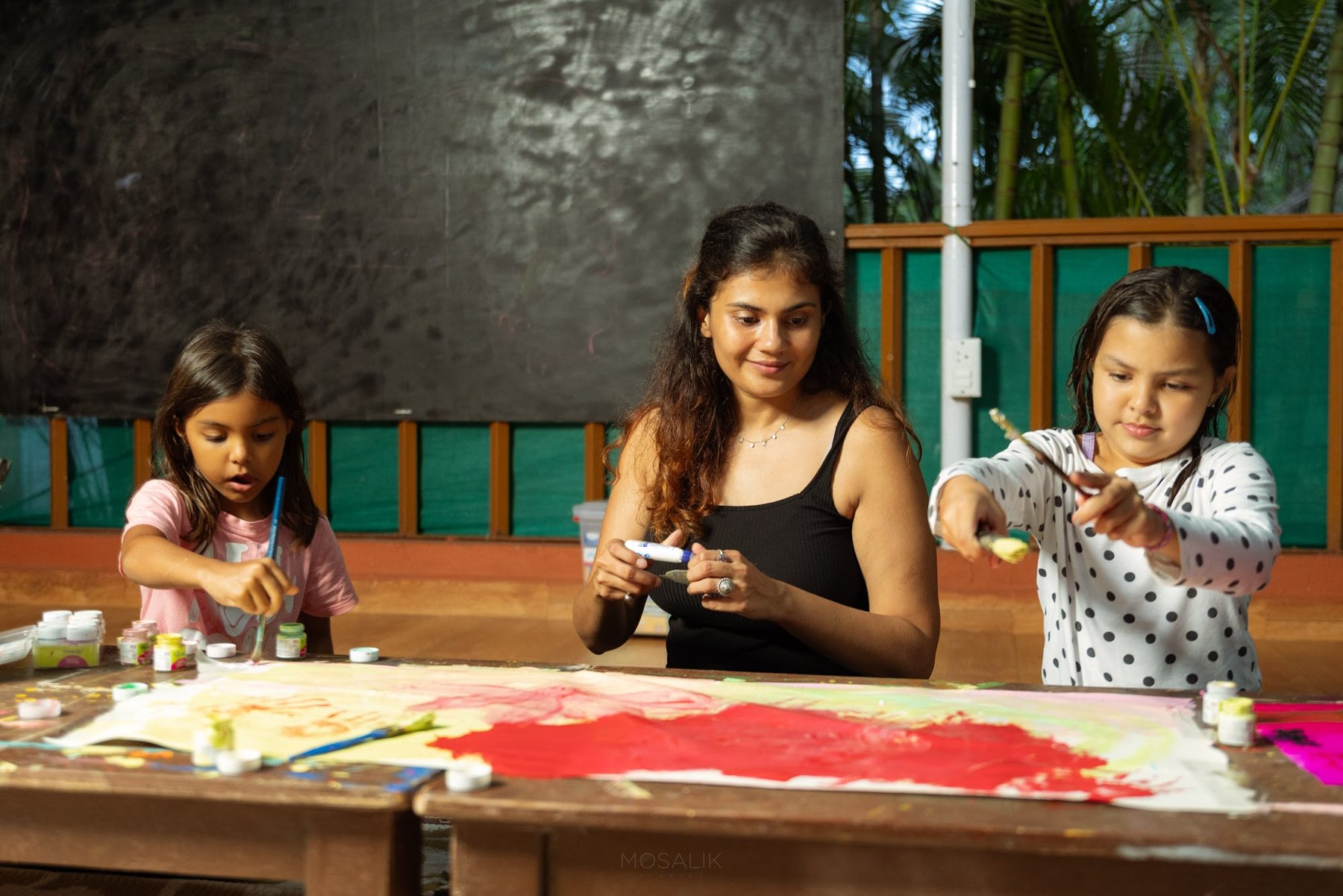
A child’s question on a nature outing, a painting they want to finish or a model built with new friends can bring fresh energy to learning. A worldschooling month gives your family room for these experiences while continuing the formal study that matters to you.
The Hub offers Waldorf-inspired, experiential morning learning, rather than an accredited school or complete academic curriculum. Families remain responsible for curriculum, examinations, qualifications, records and study supervision; individual academic tuition and exam preparation are outside the programme.
Learning through head, heart and hands
Head means curiosity and thinking things through. Heart is about listening, relationships and taking part in a group. Hands means making, moving and trying things for yourself. Together they describe a morning with ideas to explore, people to learn alongside and something practical to do.
Examples from a previous cohort, with activities shaped by the season, facilitators and group.
Children gathered for circle time, painted, made mandalas, built with Lego and went on nature excursions. These activities invite questions, choices and cooperation. Teens explored prototypes, budgets and a cultural-market stall, practising how to test ideas and explain decisions.
Start with the commitments you already have
List fixed online lessons, assignments, examinations and reporting dates. Check requirements with your school, course provider or relevant education authority. Consider time differences before choosing a cohort, especially when live lessons are essential.
Programme mornings run Monday to Friday, 8.30am to 1pm. Excursions change the usual routine, and optional afternoon activities may overlap with study. Protect a few workable study periods, then leave room for family outings and time with friends.
Prepare the practical side
Bring course access, devices, headphones, books and any essential equipment. The coworking room is shared and has no private call booths. Ask about current arrangements if your child needs a quiet setting for live lessons.
The Hub has backup power. A November 2026 speed test measured 216.7 Mbps download, 46.2 Mbps upload and 32 ms latency. Speeds vary, so check current connectivity and agree a contingency with your provider for time-sensitive assessments.
Keep a record of the month
Alongside required education records, your child might enjoy keeping sketches, photographs, questions or project notes. Let them choose what they want to remember. Ask permission before photographing other people or sharing their work.
Our teachers and facilitators lead group learning. We welcome neurodivergent children but cannot provide dedicated one-to-one support. Talk with us about participation needs and how your family’s study plan will fit. Parents remain responsible outside supervised sessions.